
9 Sonoma Wineries That Take White Wine Very Seriously
From dry Muscat and skin-contact Vermentino, to classic Chardonnay. Nine Sonoma wineries with white wine programs worth your time and your summer.
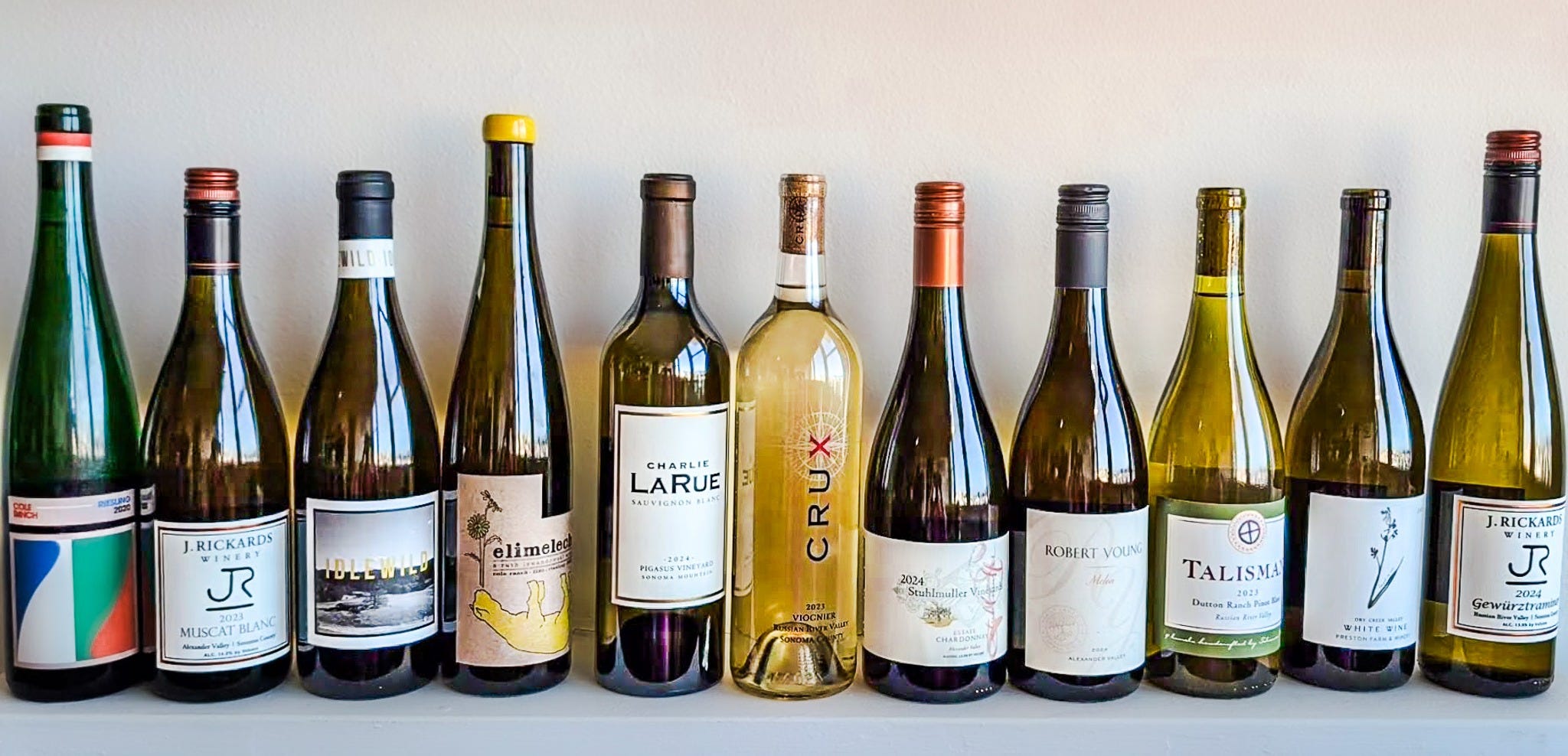
White wine doesn’t get the same prestige treatment as red (with a couple of notable exceptions: Chardonnay, and Champagne, which is mostly Chardonnay anyway). But especially as the weather warms up, whites are honestly friendlier across the board. Friendlier on your palate, friendlier at the table, friendlier on your wallet.
The trouble is that for a lot of people, “white wine” has been reduced to a buttery Chardonnay or a grassy Sauvy B. There is so, so much more out there. Aromatic, floral Viogniers and Muscats that are perfect on a hot patio (or alongside a herby summer salad). Melon de Bourgogne that practically begs for a platter of oysters. Textural, savory whites like Arneis that come alive next to olives and a hunk of hard cheese. Richer, lees-y whites like Pinot Blanc or a Sancerre-style Sauvignon Blanc that sing with a tomato-and-burrata moment.
Sonoma is absolutely stacked with whites like this. These aren’t flavorless $10 bottles from the corner store; these are whites with depth, nuance, character. And they’re almost always cheaper than the average Pinot or Cab from the same producer. (Kistler being the well-known exception, but we’ll get to that.)
So here’s the plan. Today we’re walking through nine Sonoma wineries that absolutely overdeliver on white wine, starting with the classics (done well), getting progressively nerdier and weirder (in the best way), and ending with the Chardonnay flex stop.
Let’s start with the classics.
Classic Whites, Done Right
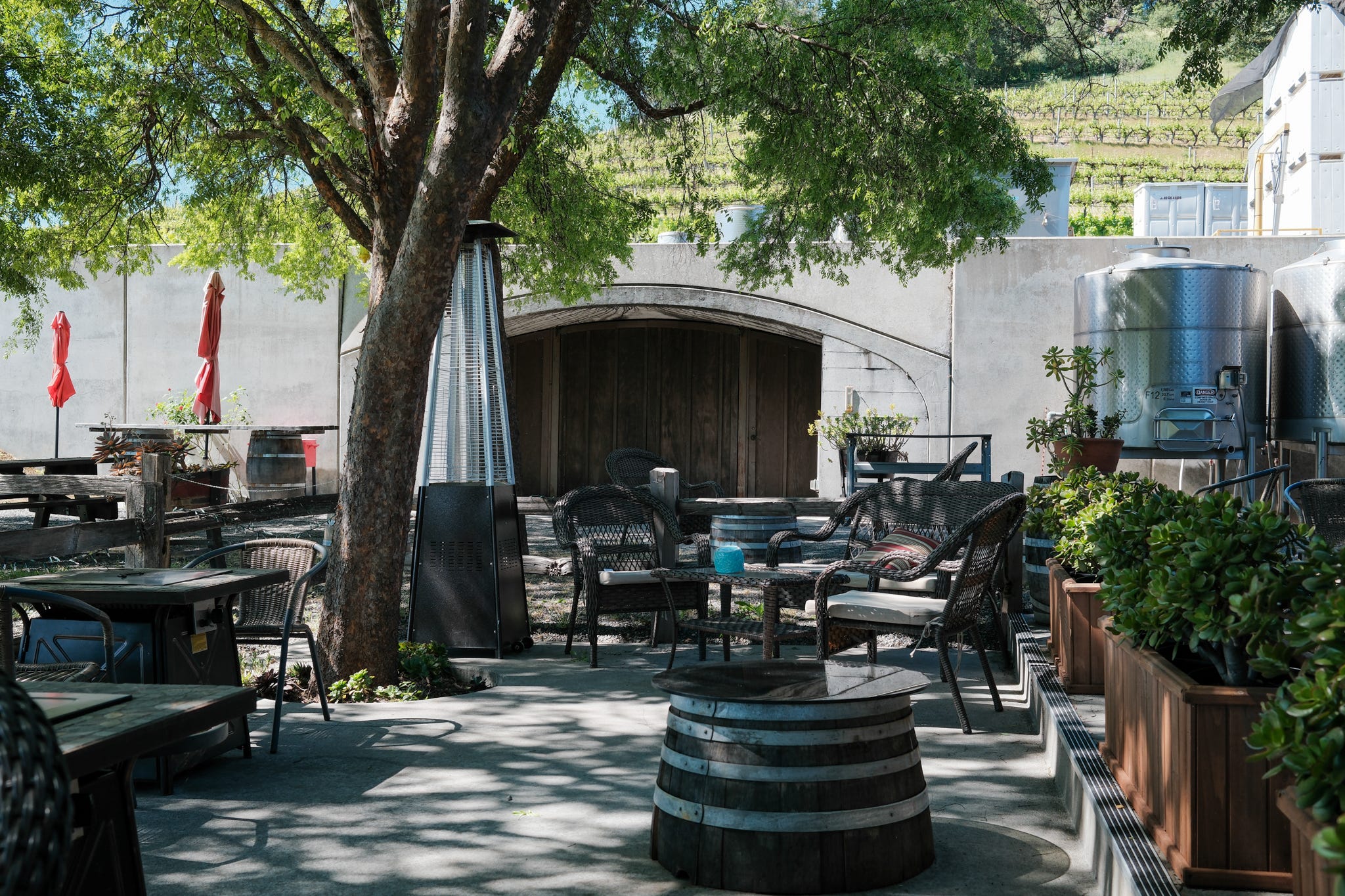
J. Rickards
If you like a little aromatic drama but want it dry and serious, J. Rickards is your spot.
J. Rickards is a small Cloverdale estate that has been farming these vineyards for 50 years. The field-blend Zin gets most of the headlines, but the whites are absolutely worth a stop.
Why it’s great for whites. This is the place that reminded me Muscat and Gewürz can be grown-up wines, not just “perfume in a glass.” Everything here leans fresh and aromatic, finishes dry (unless you don’t want it to), and goes amazingly well with August heat.
Drink:
Dry Muscat - Highly aromatic, big jasmine lift, expressive and beautiful. Way more zesty salad pairing than dessert wine.
Gewürztraminer - Rose petal, lychee, cinnamon, nutmeg, finishes dry and spicy. Made for Indian, Thai, or Mexican takeout night.
The visit. A refreshingly relaxed, rustic barn-style tasting room with wide vineyard views, plus the option to taste in the wine cave.
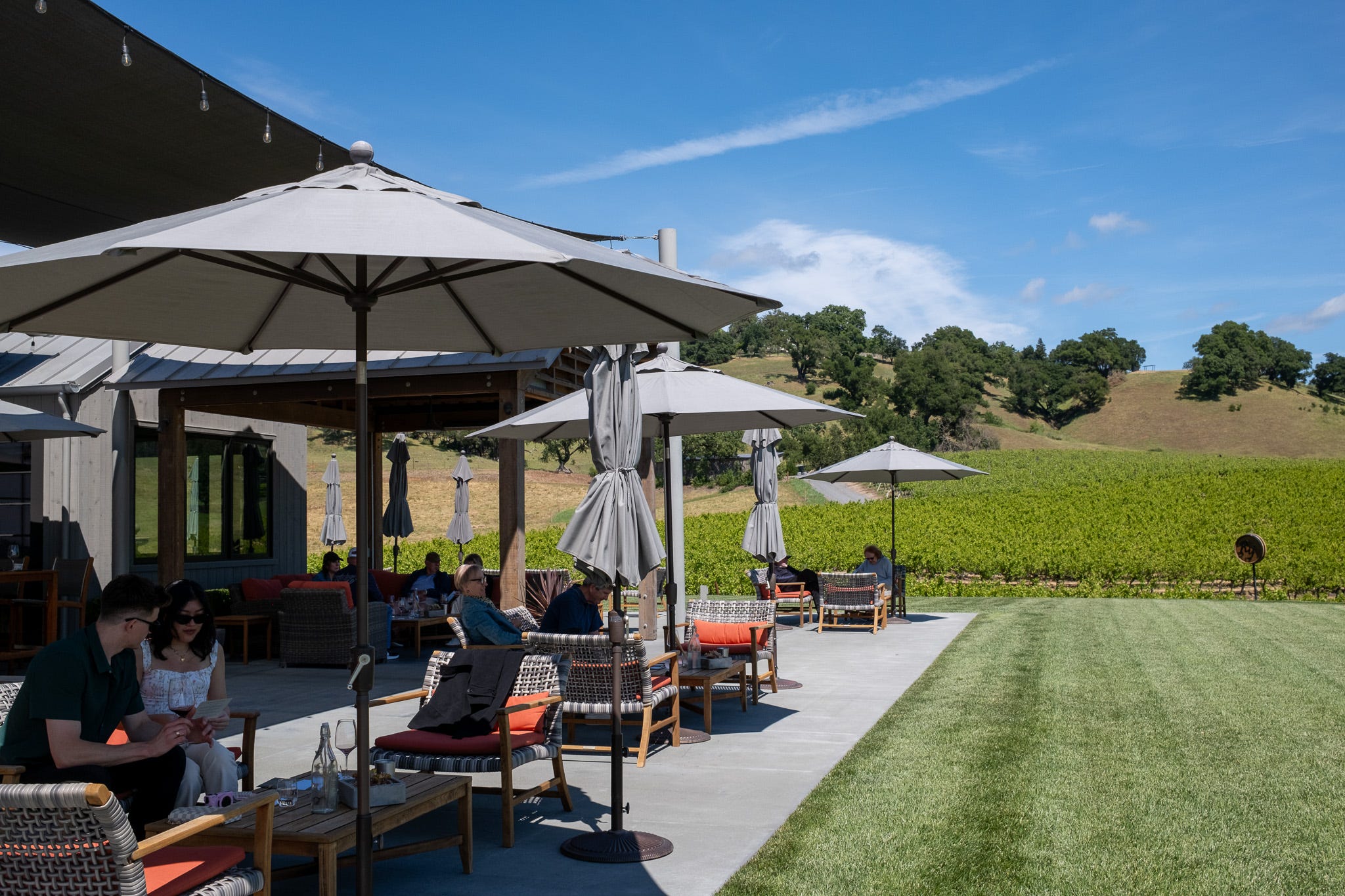
Robert Young Estate Winery
If you want one stop where you can taste a unicorn (the Melon), a small-luxury Pinot Blanc, and a serious Chardonnay back-to-back, this is it.
Robert Young Estate Winery literally put Cabernet on the map in Alexander Valley back in 1963. It also happens to have a surprising diversity of classic whites.
Why it’s great for whites. This is, as far as I know, the only producer of Melon de Bourgogne in California, which alone makes it worth the drive. Add a barrel-fermented Pinot Blanc that drinks like white Burgundy and a polished, age-worthy Chardonnay, and you’ve got a stealth white-wine destination dressed up as a Cab house.
Drink:
Melon Blanc (Melon de Bourgogne) - Lemon zest, Muscadet energy, savory and slightly salty, with a bit more richness than a typical Loire Melon. The obvious move: raw oysters and crushed ice in July.
Pinot Blanc. Opulent and barrel-fermented; roasted pear, cinnamon, hazelnut, brioche. Your roast-chicken-and-creamy-pasta white.
The visit. Tastings happen on a hilltop patio with sweeping Alexander Valley views, in a relaxed-but-polished atmosphere. There’s a white-only flight option (please take it), and on the higher-tier tastings the food pairings are genuinely thoughtful.
Want more wineries like this? Explore the full Noteworthy Guide.
Italian and Rhône Whites
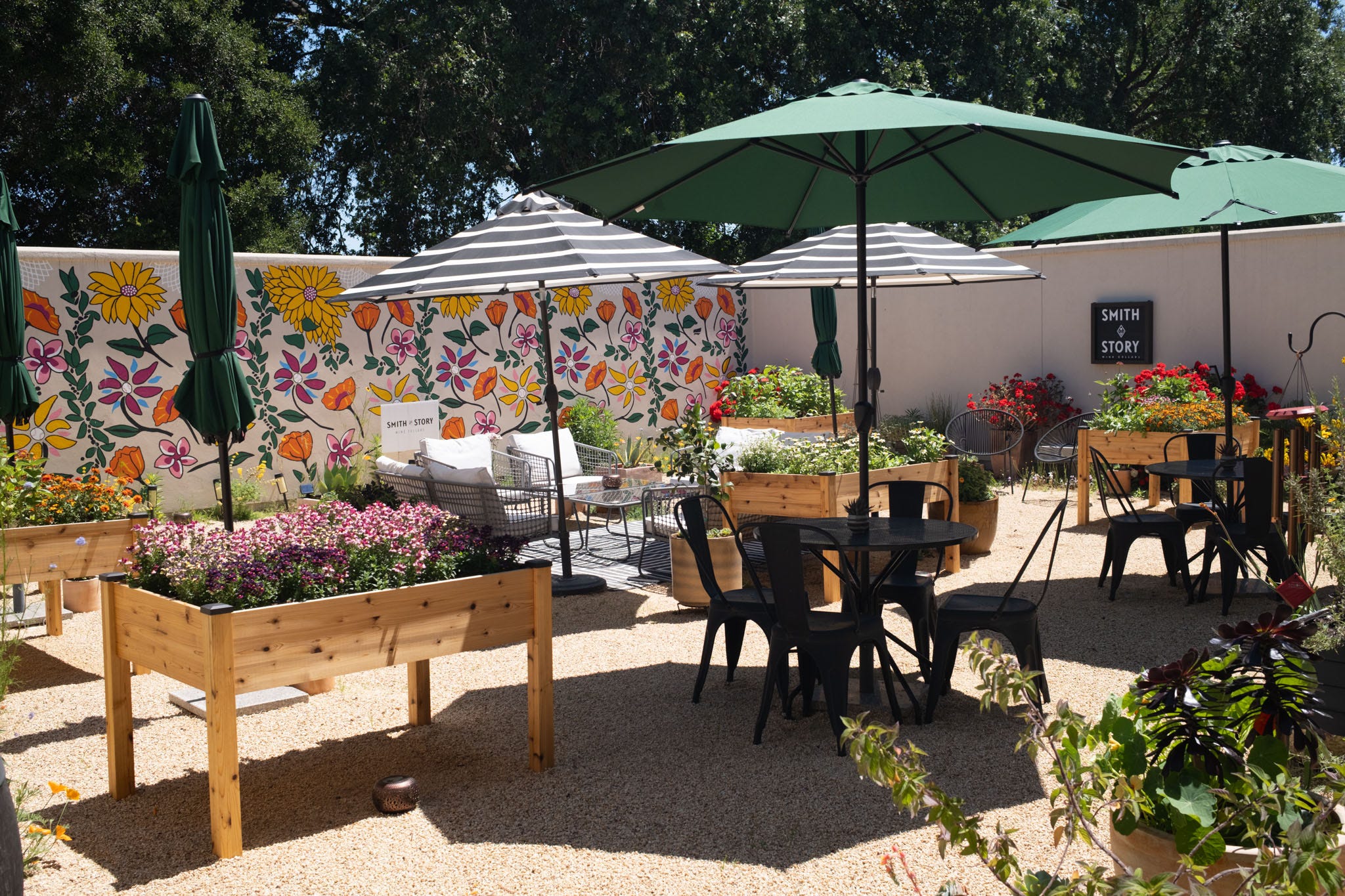
Smith Story Wine Cellars
If you like Loire whites but wish they were a little sunnier, Smith Story is your spot.
Smith Story Wine Cellars was founded by Eric and Ali Story via one of the wine world’s earliest crowdfunding campaigns. Low-intervention winemaking, native yeast, restrained oak, and a clear sense of place in every glass.
Why it’s great for whites. The white program here is essentially “Loire whites, but a little sunnier.” Lots of lees work, careful oak, and a real knack for the kind of texture that makes a white interesting beyond the first sip.
Drink:
BRAVE Blanc - A Loire-inspired blend of Sonoma Sauv Blanc and Olivet Lane Chardonnay. Bright citrus and crisp green apple wrapped in a soft, polished texture. Tastes like sunshine in a glass.
Pinot Gris - Long, cool fermentation and time on lees give it real depth without losing its energy. Way more interesting than the average PG.
The visit. Their tasting room at Bacchus Landing (just outside downtown Healdsburg) is part industrial, part inviting, fully charming. Ali brings her Texas roots in via vintage antiques and quirky collectibles, and you’ll often be poured by one of the owners themselves. Family- and dog-friendly courtyard, and a very instagrammable garden.
Unti Vineyards
The apero-perfect summer whites.
Unti Vineyards is a family-run, organically farmed estate that’s been quietly championing uncommon-for-California Italian and Rhône grapes for years. Everything is estate-grown and bottled.
Why it’s great for whites. This is genuinely one of the best price-to-deliciousness ratios in Sonoma whites. Vermentino, Fiano, Grenache Blanc, Picpoul: these are food wines with bright acid, real texture, and moderate alcohol. Unti whites beg for a pool-side apero.
Drink:
Vermentino. Fermented in stainless or concrete; expressive, fruit-driven, mineral, with the kind of acidity that resets your palate.
Cuvée Blanc. Vermentino plus Grenache Blanc plus Picpoul. Florals and fruit from the Vermentino, body and spice from the Grenache Blanc, bright citrus zip from the Picpoul. A proper summer house white.
The visit. No frills, all charm. Intimate tasting room with a $25 fee waived on a one-bottle purchase, a real chance to chat with a family member, and picnic tables outside. Everything about it feels very old Sonoma.
Skin-Contact and Experimental Whites
Idlewild
If you love textural Italian whites and want to leave with a varietal you’d never heard of, this is the move.
Sam Bilbro of Idlewild focuses singularly on rare Piedmontese varieties grown in Northern California. He was early to grapes like Timorasso and Erbaluce, long before they became sommelier catnip.
Why it’s great for whites. This is the most committed Italian-white program in Sonoma, full stop. Native yeast, minimal oak, balance over power, and the kind of textural, savory edge that makes Italian whites such killer food wines.
Drink:
Arneis (Lost Hills Ranch). Fennel, jasmine, lemon balm on the nose; beautifully balanced acid and salinity, that classic bitter-almond finish. A very pretty, standout wine. Drink it with burrata, summer tomatoes, and good olive oil.
Flora & Fauna White. Arneis, Muscat Canelli, Cortese, Favorita, and Erbaluce. Aromatic, balanced, apricot, ginger, spice, dried flowers. Built for a long lunch.
The visit. Cozy, unfussy tasting room just off Healdsburg Plaza. Add the salumi-and-cheese board (you will not regret it). Right next door is Ciao Bruto, their Italian wine and provisions shop, which makes “one more bottle” feel less like a decision and more like an inevitability.
Preston Farm & Winery
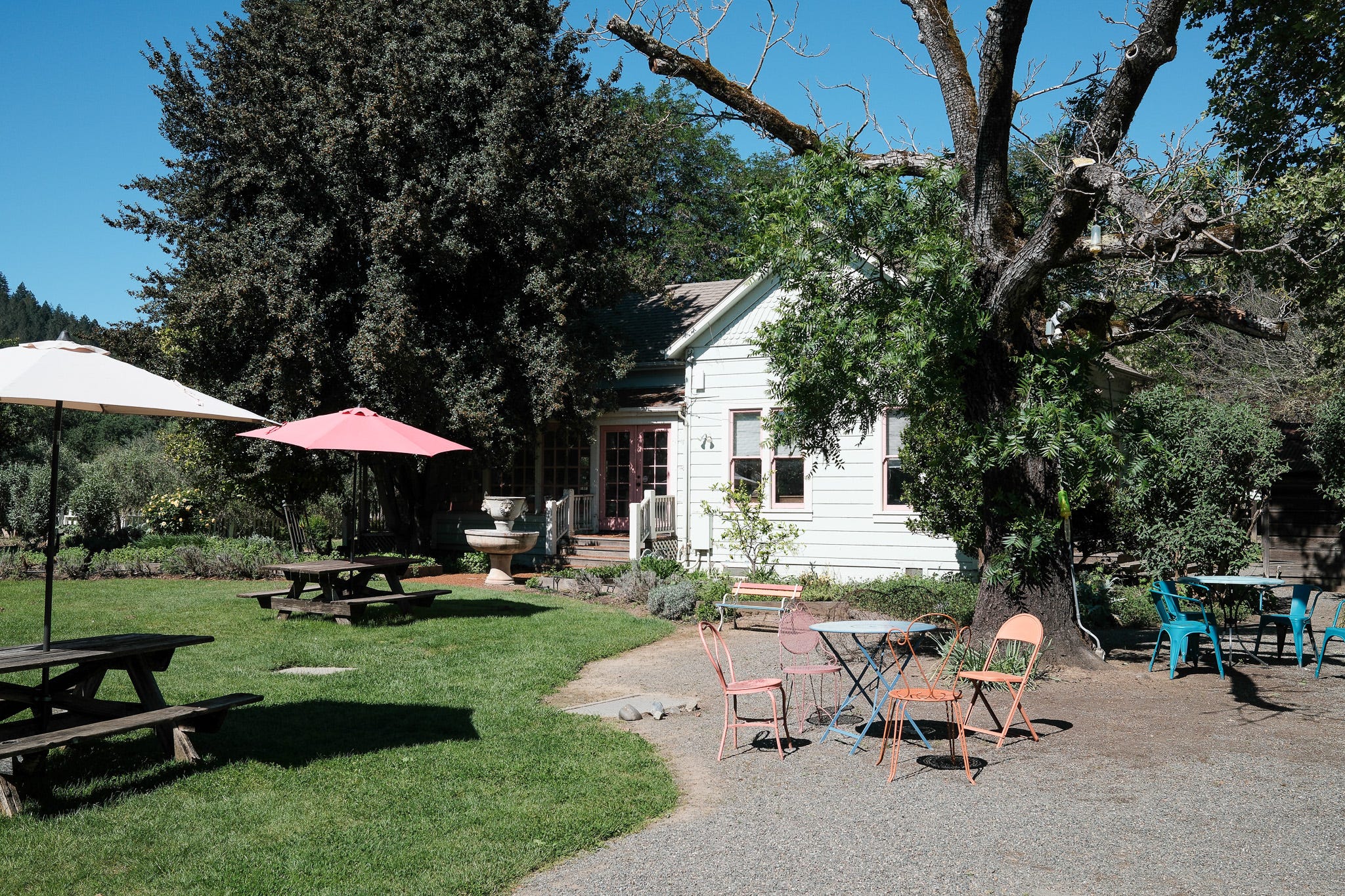
If you want a day (or you have kids in tow), not just a tasting, this is it.
Preston Farm & Winery is a family-run organic and biodynamic estate in Dry Creek, going since the 1970s. Lou Preston was an early adopter of sustainable farming, and over the years it’s grown into a 125-acre diversified farm: vineyards, olive groves, orchards, grain fields, the whole picture.
Why it’s great for whites. Preston quietly has one of the most interesting white lineups in the county, spanning classic Rhône blends, a skin-contact Italian-leaning blend, and a vibrant Sauvignon Blanc. Native ferments, minimal sulfur, real restraint.
Drink:
“White Wine” (a favorite). Aptly named because there’s nothing else like it. Skin-contact Sauvignon Blanc with Ribolla Gialla and Tocai Friulano. Sage, tomato leaf, tropical hints, real aromatic complexity. Crunchy, herbal, and basically built for any veg-forward dish (a caprese or an herby roast chicken is non-negotiable).
Estate Sauvignon Blanc. Super fresh and sunny, but also about as far from grassy SB as you can get.
The visit. A true taste of country life. Picnic, play bocce, raid the farm store for housemade sourdough, estate olive oil, pickled vegetables, and seasonal produce (kids can pick strawberries in summer).
Ryme Cellars
If you want a small-production stop deep in Sonoma’s less-travelled wine country, this is it.
Ryme Cellars is husband-and-wife team Ryan and Megan Glaab, making distinctive wines from rare Italian and other unconventional grapes. Native yeasts, neutral oak, occasional skin contact, decidedly old-world sensibility.
Why it’s great for whites. The His & Hers Vermentino concept basically tells you everything you need to know: same grape, same vineyard, two completely different philosophies, both excellent. It’s a masterclass in how much winemaking choices matter.
Drink:
Vermentino “Hers.” Whole-cluster pressed, bottled early for brightness. Lemon rind, white florals, salty sea spray, zippy and crunchy. Patio wine of the year, probably.
Vermentino “His.” Made as an “orange” wine, with skin ferment and longer time in barrel. But no oxidation or bruised apple here, just a distinct delicate nutty note begging for a hard cheese. (I am very into savory textured whites lately, so His was the one for me.)
The visit. A historic Forestville building, rustic-chic indoor-outdoor seating, kids and dogs welcome. Serious wines, approachable tasting.
Ruth Lewandowski Wines
If you love orange wine and tinned fish, Ruth Lewandowski is your church.
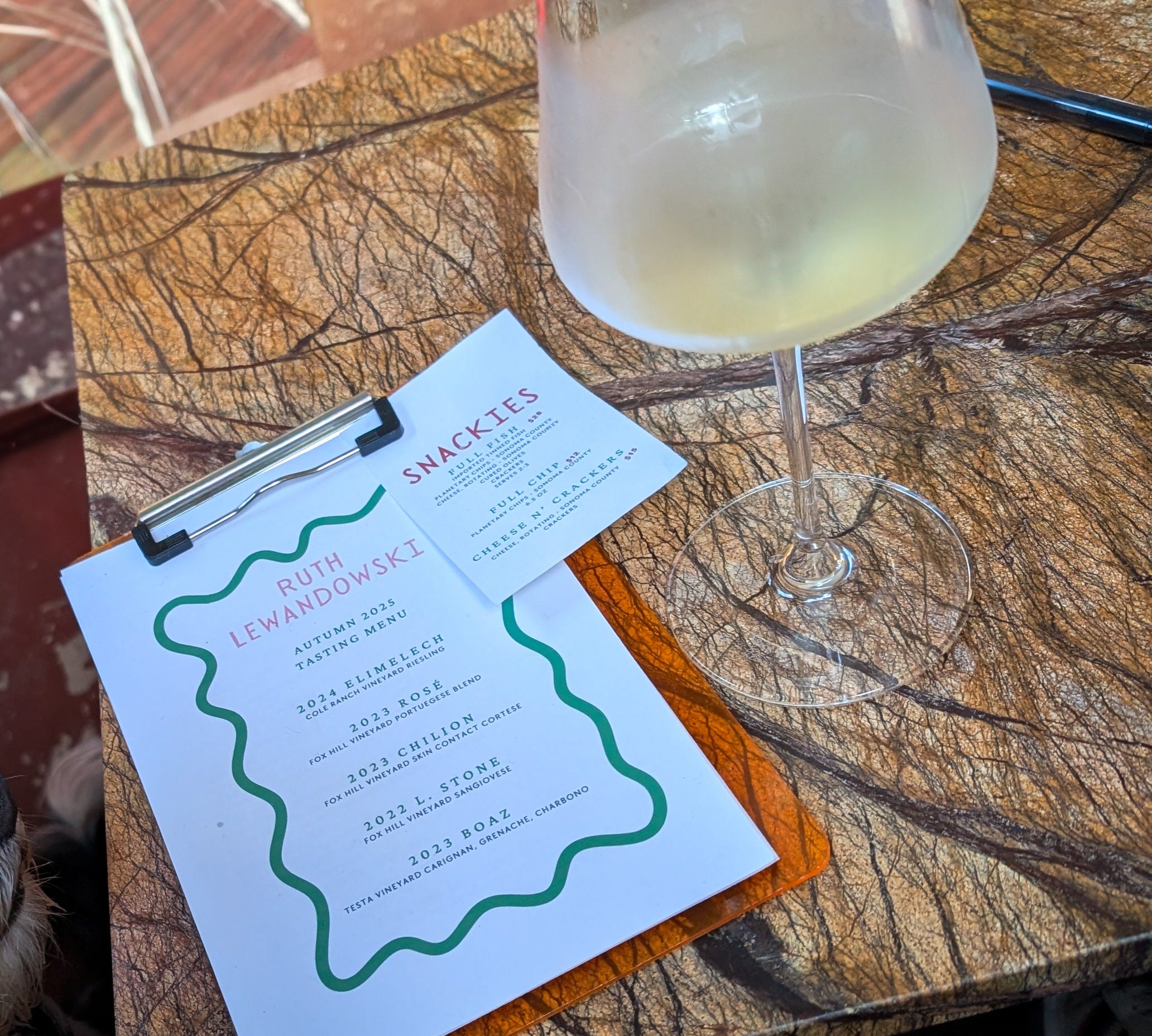
Ruth Lewandowski Wines is winemaker Evan Lewandowski’s textbook definition of natural: wild yeasts, no additives, no fining, no filtration. Field blends, quirky varieties, and a healthy dose of personality. If these wines had a persona, they’d be wearing vintage overalls and quoting Wendell Berry at a kombucha bar.
Why it’s great for whites. This is the most adventurous white lineup on the list. Riesling, Scheurebe, Cortese, Arneis, Grüner, skin-contact blends, all leaned into for their savory, textural, food-loving side. If you’ve ever thought “natural wine is too funky for me,” Ruth’s whites are the gateway.
Drink:
Elimelech Riesling. A flashy, fleshy side of Riesling, with a fascinating savory edge that’s almost reminiscent of flor in fino sherry, while still keeping the classic florals. Save it for a Spanish-y spread: olives, tinned fish, hard cheese.
Abandoned Meander (Scheurebe). Sauvage, musky aromas that genuinely smell like a Thanksgiving platter. (Yes, really. Yes, in a good way.)
The visit. A small but charming tasting room in Forestville (in what used to be Ryme’s storage space, on the same block, a natural double-header). Tastings come with appropriately unconventional snacks: tinned fish, pickled things, cheeses with names longer than the wine list.
The Chardonnay Flex
Kistler Vineyards
If you’re going to blow the budget on Sonoma Chardonnay once this year, make it here.
You cannot talk about Sonoma white wine and skip Kistler Vineyards. (Even if Kistler himself left in 2017 and is now focused on Occidental.) For over 40 years this has been the benchmark for serious California Chardonnay, full stop.
Why it’s great for whites. Kistler is the benchmark not just because of quality, it’s the single-clone program, which lets you taste how one heritage Chardonnay clone expresses itself across different Sonoma sites.
Drink:
Chardonnay, all of it. The wines are rich and textured but never sloppy. Ripe pear, peach skin, citrus oil, silky body, focused finish. Burgundian in intent, Sonoma in volume.
The visit. Intimate, appointment-only tastings at the beautifully restored 19th-century Trenton Roadhouse, set among the vines in the southern Russian River. Guided one-on-one, with a standout option to taste the same Chardonnay clone across multiple distinct vineyards. It’s the kind of tasting you remember.
One Last Thing
If you only do one thing with this post: pick the winery from the section that sounds least like what you usually drink, and try it this week. The whole point of this list is that “white wine” is way bigger than the two grapes most of us default to, and Sonoma is where that’s getting most interesting right now.
Cheers!
Noteworthy is an independent, unsponsored guide to California’s most noteworthy wineries. If you enjoy these recommendations, you can explore the full guide of curated wineries on Noteworthy.wine.
Or subscribe on Substack for twice monthly updates on new wineries, tasting notes, and California wine intel, free.
Great picks! Centennial Mountain on the plaza in Healdsburg makes an awesome Carricante as well, if that's your jam.